Prices are in local currency: Peruvian soles (S/); US$1 was about S/ 3.44 on November 23, 2026. Fees change, so check the official sites before you go.
The Cusco Tourist Ticket (Boleto Turístico del Cusco) is the pass that bundles 16 archaeological sites and museums in the city and the Sacred Valley. The full ticket (integral) costs S/ 130 for foreign visitors and S/ 70 for Peruvians and residents, is valid for 10 days and gives access to all 16 places, according to the official price list of COSITUC, the committee that runs it. If you don’t want to see everything, there are three partial tickets at S/ 70 for foreigners and S/ 40 for nationals, each one covering a group of sites.
Watch out for a common mix-up: Machu Picchu is not included in this ticket, and neither are Cusco Cathedral or the church and convent of Santo Domingo (what almost everyone calls “the Qorikancha”). Those are paid separately. Below I lay out what each circuit covers, what is left out and where to buy it.
Cusco Tourist Ticket price in 2026
These are COSITUC’s current prices. The ticket is issued in your name, and its validity starts on the day you buy it, not when you enter the first site.
| Ticket | Foreign visitor | Peruvian or resident | Valid for |
|---|---|---|---|
| Full (16 places, 3 circuits) | S/ 130 | S/ 70 | 10 days |
| Full, student | S/ 70 | S/ 40 | 10 days |
| Partial, Circuit I | S/ 70 | S/ 40 | 1 day |
| Partial, Circuit II | S/ 70 | S/ 40 | 2 days |
| Partial, Circuit III | S/ 70 | S/ 40 | 2 days |
Prices from the official COSITUC price list. The ticket does not include a guide or transportation, and there is no discount for teachers or for holders of the CAN (Andean Community) card, according to its frequently asked questions.
What each circuit includes
The 16 places on the full ticket are split into three circuits. If you buy a partial ticket, you pay S/ 70 for the group you choose:
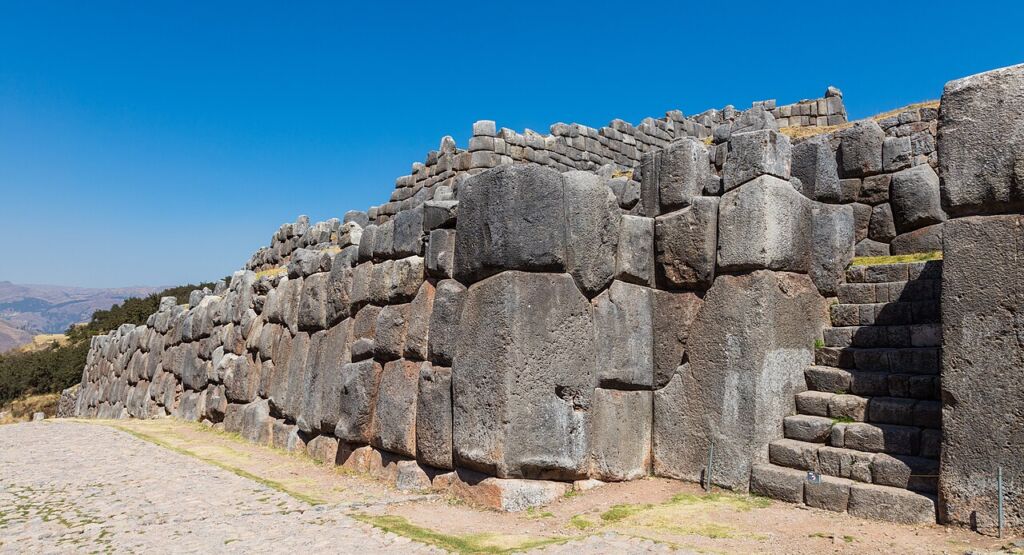
- Circuit I (ruins near the city): the Saqsayhuamán archaeological park, Q'enqo, Puka Pukara and Tambomachay. Valid for 1 day. It is the circuit of the Inca ruins that surround Cusco, a few minutes from the center.
- Circuit II (city and South Valley): the Qorikancha Site Museum, the Regional Historical Museum, the Museum of Contemporary Art, the Pachacuteq Monument, the Museum of Popular Art, the Qosqo Center of Native Art, and the archaeological parks of Tipón and Pikillaqta. Valid for 2 days.
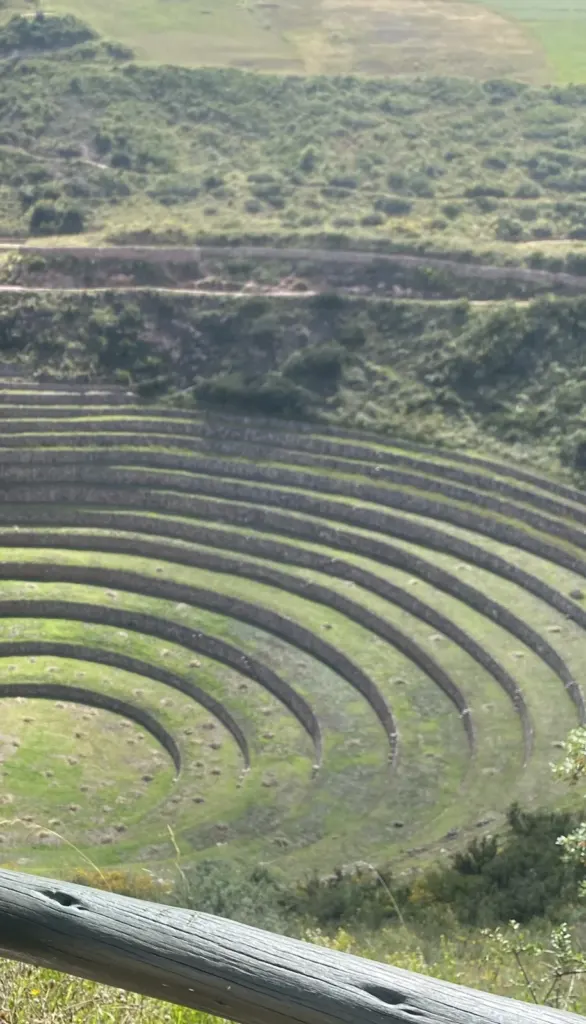
- Circuit III (Sacred Valley): the archaeological parks of Pisaq, Ollantaytambo, Chinchero and Moray. Valid for 2 days. It is the circuit you use on your Sacred Valley day.
Details on each site are in the COSITUC listings. Circuit I is the most visited because Saqsayhuamán is within walking distance of the Plaza de Armas if you are up for the climb.
What the tourist ticket does NOT include
This is where most people get confused. The ticket covers archaeological sites and museums, but it leaves out several Cusco essentials, and each one has its own admission:
- Machu Picchu. It has its own ticket from Peru’s Ministry of Culture, with an entry time and a route, bought separately. Prices and circuits are in my guide to Machu Picchu tickets 2026.
- The church and convent of Santo Domingo (Qorikancha). The ticket only covers the Qorikancha Site Museum, which is under the esplanade; the colonial church built on top of the Inca walls is paid at its door. I explain it in Qorikancha: price and hours.
- Cusco Cathedral and the churches in the center. They are part of the Archdiocese’s religious circuit, which is a separate ticket.
- The Maras salt pans and Rainbow Mountain. They are private or community-run and charge admission on site.
Full or partial ticket? Which one makes sense for you
It depends on how many days you have. Do the quick math: if you plan to see the nearby ruins (Circuit I) and the Sacred Valley (Circuit III), two partial tickets add up to S/ 140, while the full ticket costs S/ 130 and also throws in the city museums and the South Valley. As soon as you do more than one circuit, the full ticket wins.
The partial ticket makes sense if you are short on time and only care about one block: for example, one day for Saqsayhuamán and the ruins above the city, or a Sacred Valley day on a tour. If you have three full days in Cusco, the full ticket is the clear choice; I split it up day by day in Cusco in 3 days.
Where and how to buy the tourist ticket
You buy it in person, not online. The main point of sale is COSITUC’s Counter Central, at Av. El Sol 103 (Galerías Turísticas), open Monday to Sunday. Several of the included sites sell it too, but some Circuit II museums have no ticket office, so the safest bet is to buy it on Avenida El Sol before you start. All of this comes from COSITUC’s frequently asked questions.
Three details that save you surprises, from the same source:
- Bring your passport or ID: the ticket is in your name and they ask for it together with your ID at each site, so it cannot be lent or resold.
- Children up to age 9 do not pay. From 10 to 17 they buy the student ticket with their ID; from 18 to 25, with a valid university ID or ISIC card.
- Pay in soles and buy the ticket on the same day you start your visits, because the validity runs from the purchase date.
How it fits into your trip
The ticket is the backbone of almost everything you will do in Cusco. On day one, while you acclimatize, the Circuit I ruins and the Qorikancha in the center work well. On day two, the Sacred Valley and Ollantaytambo with Circuit III. And if you finish at Machu Picchu, look early at how to get to Machu Picchu from Cusco. The full itinerary, with the ticket split by day, is in Cusco in 3 days.
Frequently asked questions
How much does the Cusco Tourist Ticket cost in 2026?
The full ticket costs S/ 130 for foreigners and S/ 70 for Peruvians and residents, valid for 10 days. The partial tickets for circuits I, II or III cost S/ 70 for foreigners and S/ 40 for nationals (COSITUC).
What does the Cusco tourist ticket include?
16 sites in three circuits: the nearby ruins (Saqsayhuamán, Q'enqo, Puka Pukara and Tambomachay), city museums including the Qorikancha Site Museum, Tipón and Pikillaqta in the South Valley, and the Sacred Valley (Pisaq, Ollantaytambo, Chinchero and Moray).
Is Machu Picchu included in the tourist ticket?
No. Machu Picchu has its own ticket from the Ministry of Culture, with an entry time and a route, bought separately at tuboleto.cultura.pe.
Is the Qorikancha included in the tourist ticket?
Only the Qorikancha Site Museum, on Circuit II. The church and convent of Santo Domingo, which is what almost everyone has in mind, is paid separately at its own entrance.
Can you buy the Cusco tourist ticket online?
No. You buy it in person at the Counter Central at Av. El Sol 103 or at several of the included sites (COSITUC).
How long is the Cusco tourist ticket valid?
The full ticket is valid for 10 days from purchase. The partial tickets are valid for 1 day for Circuit I and 2 days for circuits II and III (COSITUC).
This English version is a translation of my Spanish guide, made with AI assistance and checked against the original for prices, hours, dates and links. Leer en español

José G.
José G. is a Peruvian traveler who lives in Mexico. Born in Lima and Mexican by adoption, he travels around Mexico and Latin America and writes about what he tries first-hand: where to eat, which museums are worth it, where to stay and what everything really costs. He loves good food, museums, soccer and traveling as a couple. He writes with real prices and honest opinions, and he does not recommend places he has not been to.
How I made this guide: I went in person, and the photo credited “Photo: José G.” is mine. If something did not convince me, I say so.
Keep planning
Cusco Itinerary for 3 Days: Tourist Ticket and What to See
Machu Picchu Tickets 2026: Prices, Circuits and How to Buy