Prices are in local currency: Mexican pesos (MX$); US$1 was about MX$19.2 on November 23, 2026. Fees change, so check the official sites before you go.
This Oaxaca itinerary for 7 days covers the historic center, Monte Albán, the Tlacolula Valley with Hierve el Agua, the mountains and even a breather on the coast. We put it together this way after traveling it slowly: fewer kilometers, more tlayudas (large toasted tortillas with toppings) and mezcal without a road hangover.
How we planned this Oaxaca itinerary
Oaxaca is huge and deceptive. On the map everything looks close, but the mountains and the coast cost you hours of curves, not kilometers. That’s why our Oaxaca itinerary spends the first four days in the city and the central valleys, leaves one day for the Sierra Norte and saves the end for going down to the beach. If you hate early mornings or winding roads make you carsick, stay in the valleys and cut the coast: that’s fine, there’s plenty to do in Oaxaca without moving around so much.
We got around with a mix of colectivos (shared vans), ADO buses and a couple of shared tours for the long days. Renting a car is convenient, but driving to Hierve el Agua on dirt stretches with no cell signal isn’t for everyone. Below is the day-by-day breakdown, with roughly what we spent and where we ate well without being overcharged.
Route summary and approximate budget
| Day | Area | Don’t miss | Approx. spend per person (MXN) |
|---|---|---|---|
| 1 | Oaxaca City | Zócalo (main square) and Santo Domingo | MX$500–700 |
| 2 | Monte Albán + neighborhoods | Zapotec archaeological site | MX$600–850 |
| 3 | Tlacolula Valley | Hierve el Agua and Mitla | MX$900–1,300 |
| 4 | Mezcal route | Palenques (mezcal distilleries) in Matatlán | MX$700–1,000 |
| 5 | Sierra Norte | Cuajimoloyas and the forest | MX$800–1,200 |
| 6 | Transfer to the coast | Puerto Escondido | MX$700–1,000 |
| 7 | Coast | Mazunte and Zipolite | MX$600–900 |
The budget doesn’t include lodging or the flight or bus to get there. Set aside MX$300–800 per night if you’re traveling as a couple and looking for hostels or simple hotels downtown; luxury hotels shoot up above MX$3,000.
Day 1: Arrive and get lost in the historic center
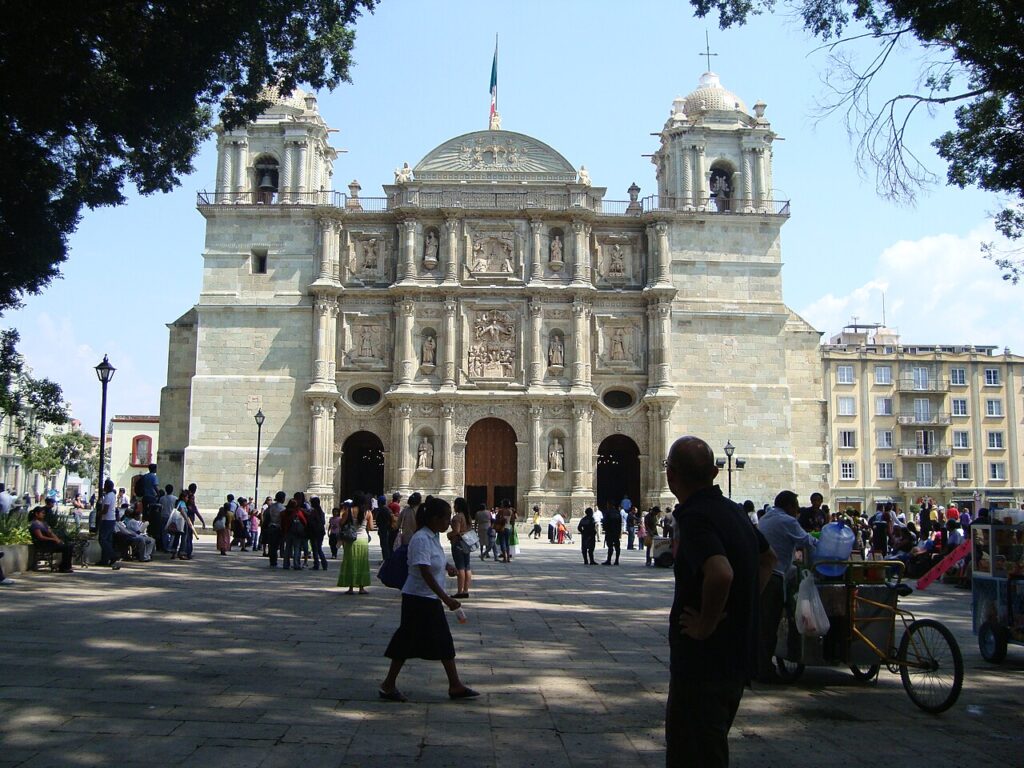
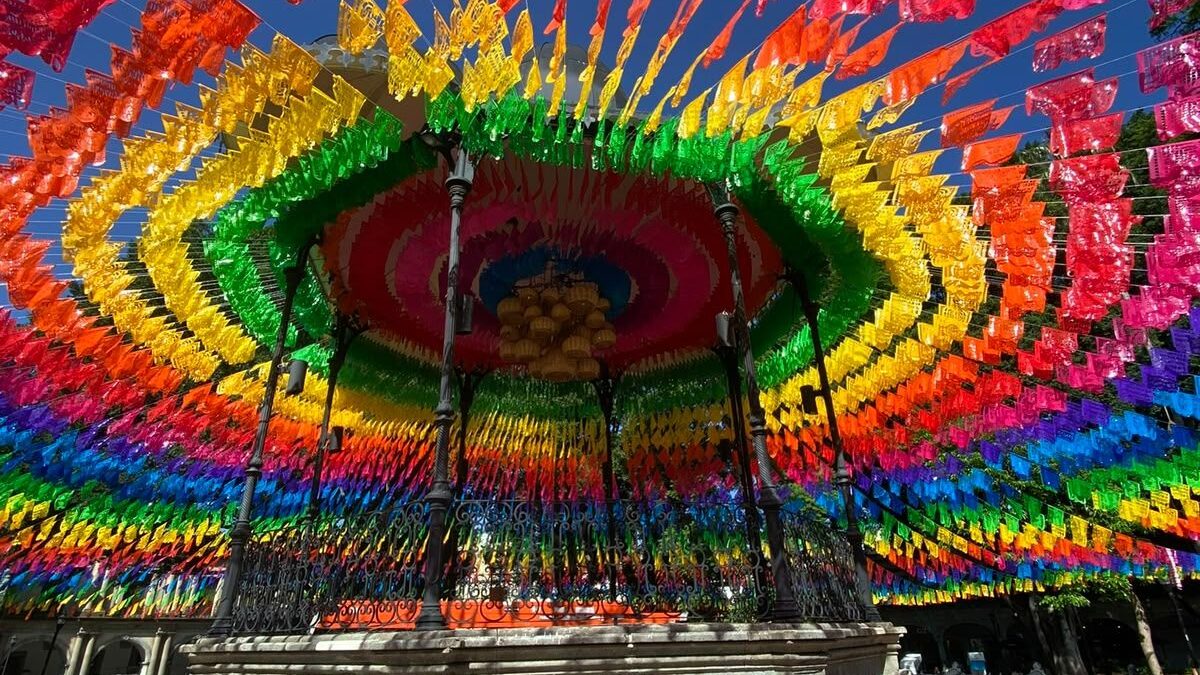
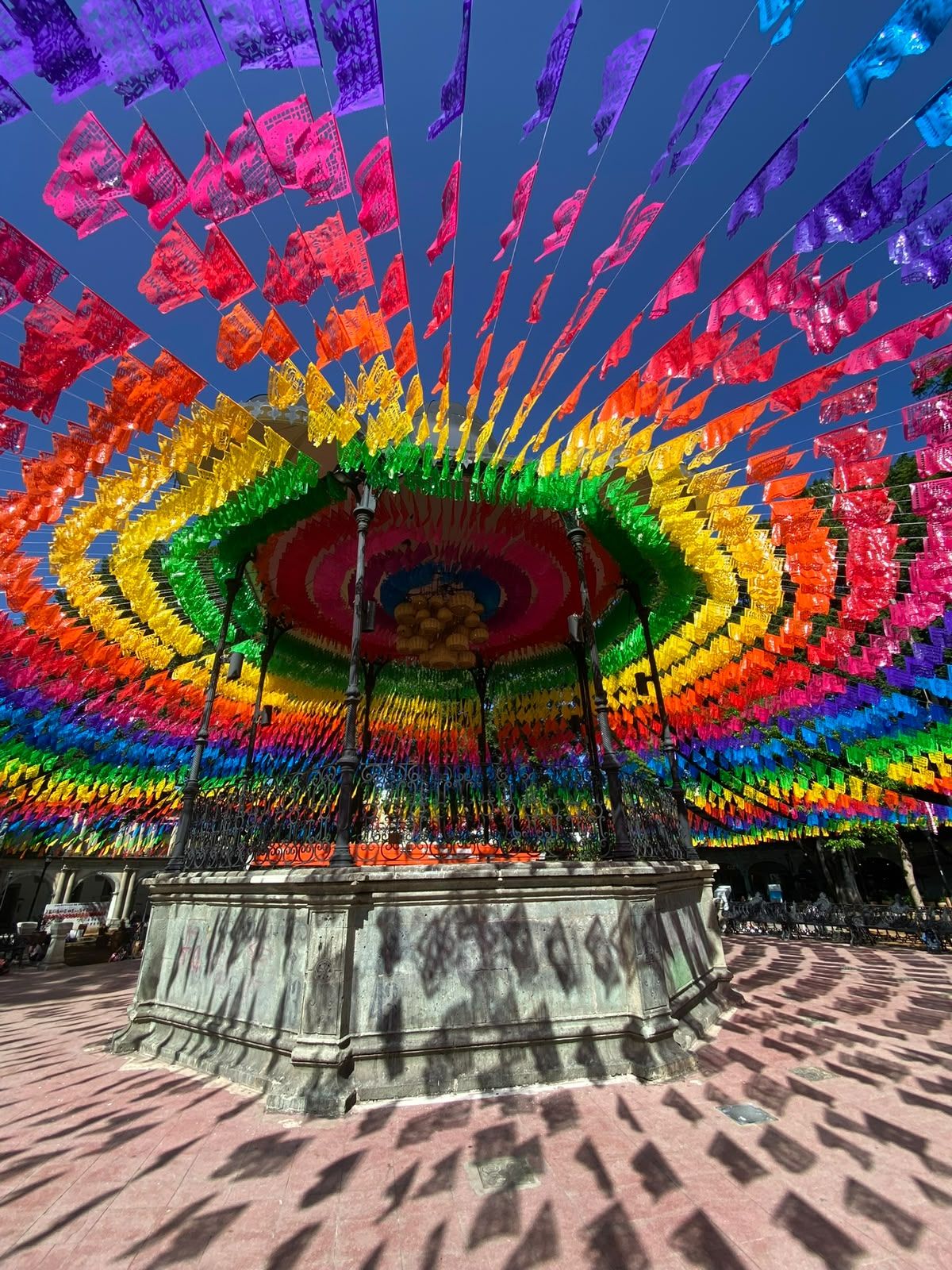
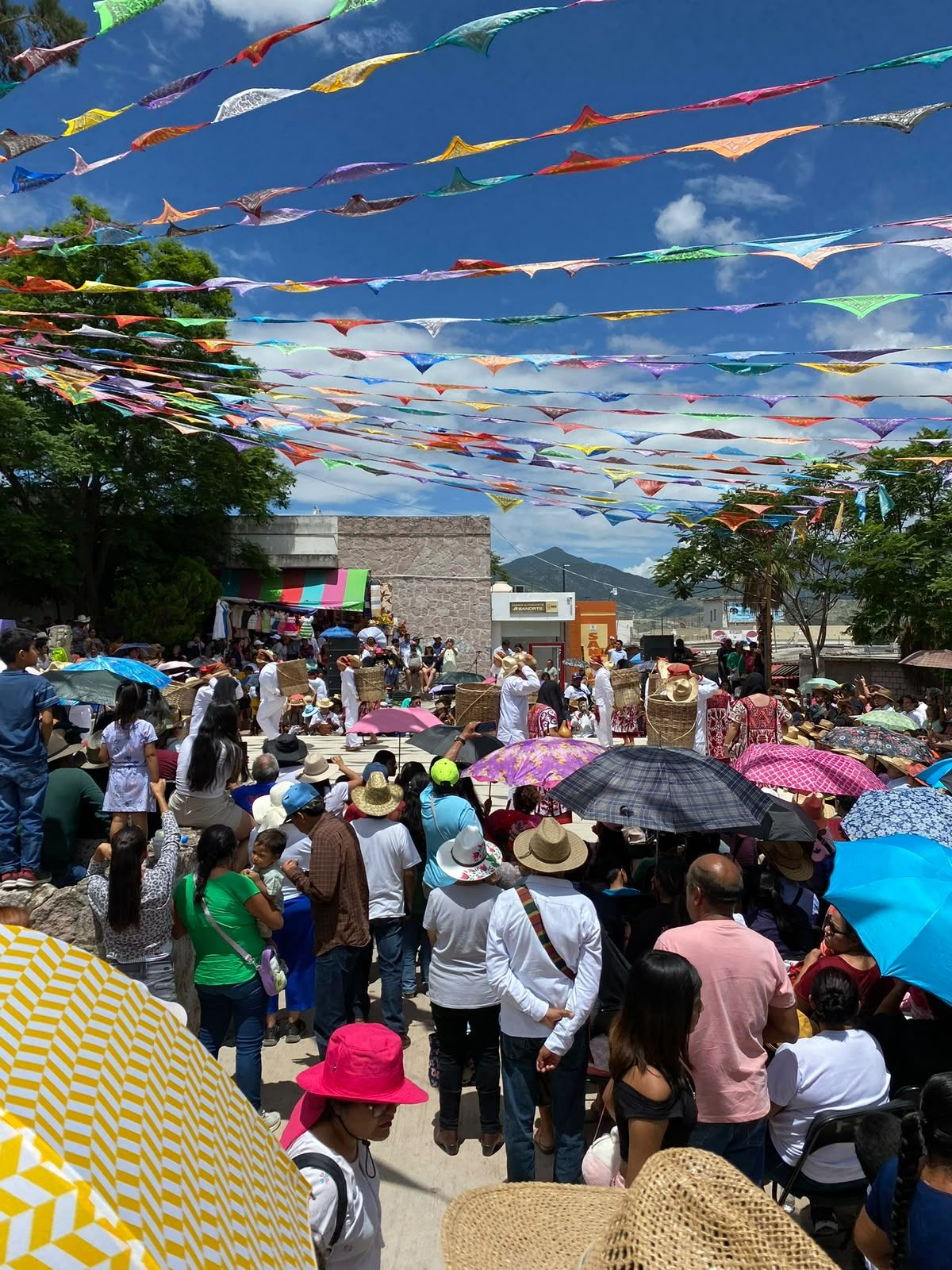
Don’t fill the first day with anything. We landed mid-morning, dropped off our backpacks and walked with no plan. Downtown Oaxaca is flat and colorful, and you can cover it on foot in a couple of hours. Start at the Zócalo, continue along the Macedonio Alcalá pedestrian street and finish in front of the Temple of Santo Domingo de Guzmán, which in the afternoon, with the sun hitting the green cantera stone, is one of the prettiest sights in the city.
Next door is the Ethnobotanical Garden (Jardín Etnobotánico), which you can only visit on a guided tour (about MX$100 in Spanish, more in English), and it’s worth every peso if you like plants and history. For dinner, we went into the Mercado 20 de Noviembre, three blocks from the Zócalo. There you put together a full meal of tlayuda, tasajo (thin-cut beef) and agua fresca for MX$120–180. The Pasillo del Humo (“smoke alley”), where you pick your meat and they grill it on the spot, is noisy, packed and exactly what you want on your first night.
- Getting around: everything on foot from the Zócalo.
- Where to eat: Comedor Chabelita or any stall in the Pasillo del Humo.
- Tip: buy your souvenir mezcal on the last day, not the first; it’s heavy and it breaks.
Day 2: Monte Albán, no rush
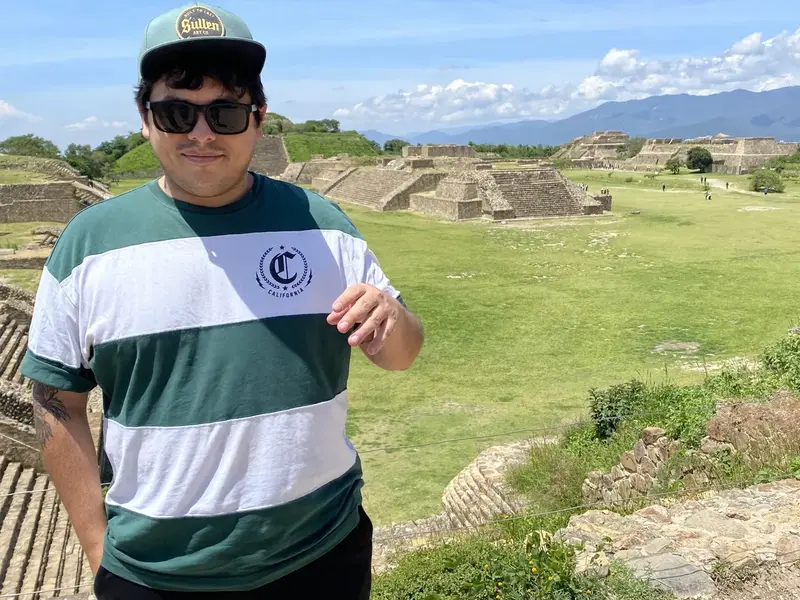
Monte Albán is the reason a lot of people come to Oaxaca, and it doesn’t disappoint. The old Zapotec capital crowns a hilltop that was leveled by hand more than two thousand years ago, with 360-degree views over three valleys. Go up early: it opens at 8 a.m., and by 11 a.m. the sun is merciless.
Foreign visitors pay about MX$210; Mexicans with ID pay about MX$105. On Sundays it’s free for Mexican nationals and residents, though it gets crowded. The ticket includes the site museum, which you shouldn’t skip because it explains the Danzantes stelae. It’s about 10 km from downtown; the tourist bus leaves from an office near the Zócalo around 8:30 a.m. and charges about MX$100–120 round trip. Public transportation drops you far away and you end up walking, so we don’t recommend it here.
Back in the city, spend the afternoon in the neighborhoods: Jalatlaco, with its cobblestone streets and murals, or Xochimilco and its aqueduct. Have mole for dinner; Oaxaca’s seven moles deserve at least one plate of mole negro with chicken. If you want ideas for city getaways on another trip, we have a guide to Pueblos Mágicos near Mexico City (towns Mexico officially designates as “Magic Towns”) that pairs well with a stop in the capital.
Day 3: The big Tlacolula Valley day

This is the heavy day and the one that pays off the most. In a single outing you cover the Tule tree, Teotitlán del Valle, Mitla and Hierve el Agua. It’s a lot of kilometers and several stops, so we took a shared tour (about MX$500–700 per person, without entry fees or food). You can do it on your own by colectivo, but you end up fighting schedules and reaching Hierve el Agua too late in the afternoon.
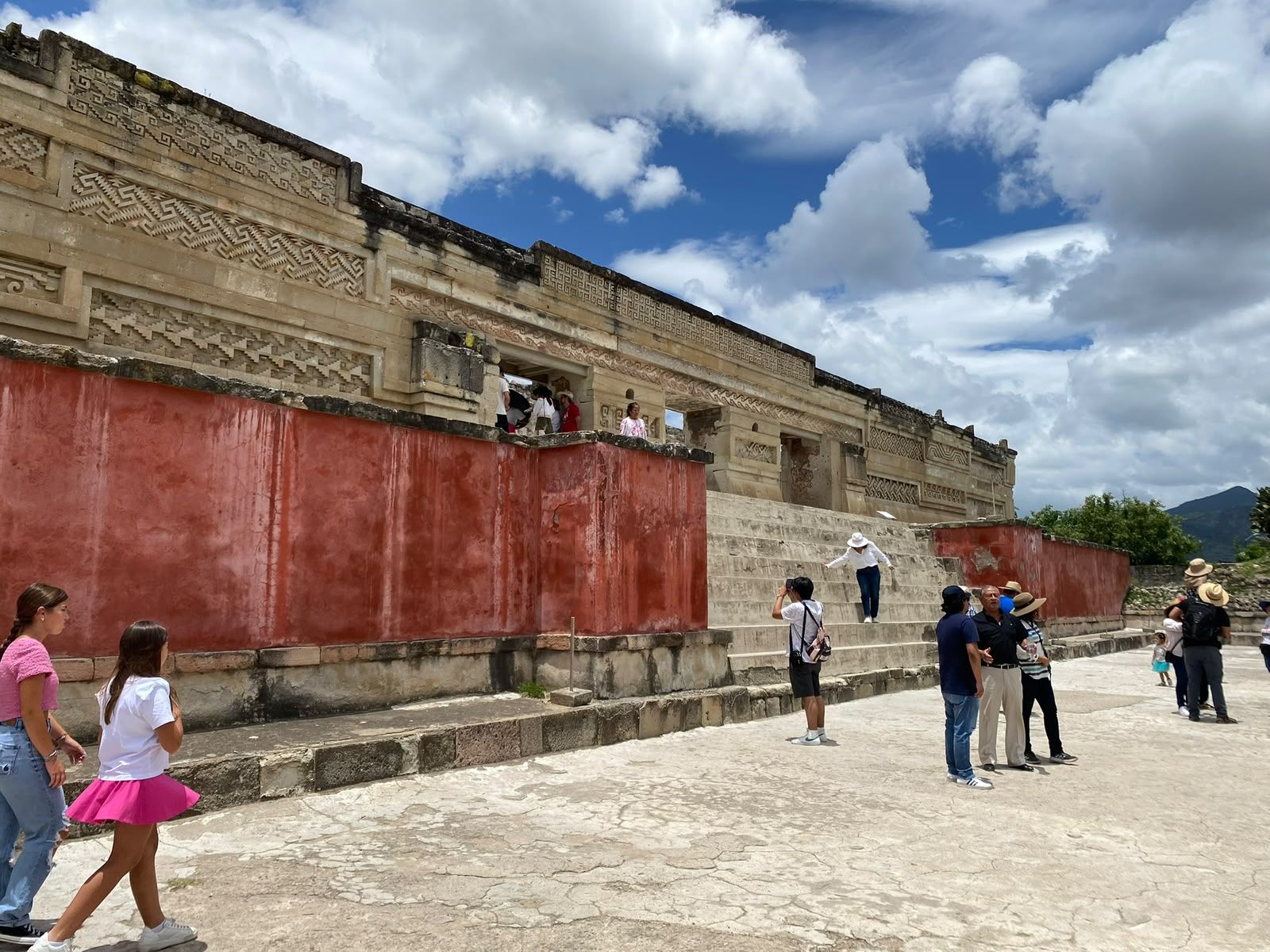
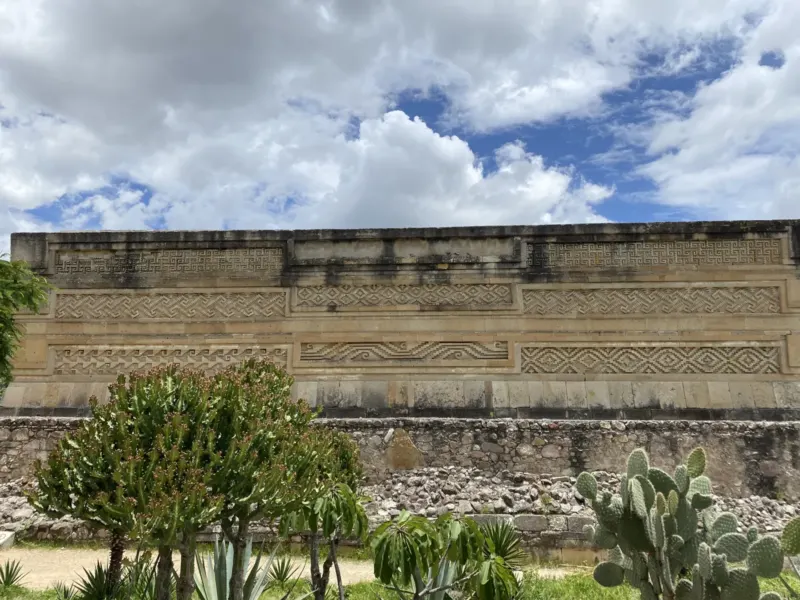
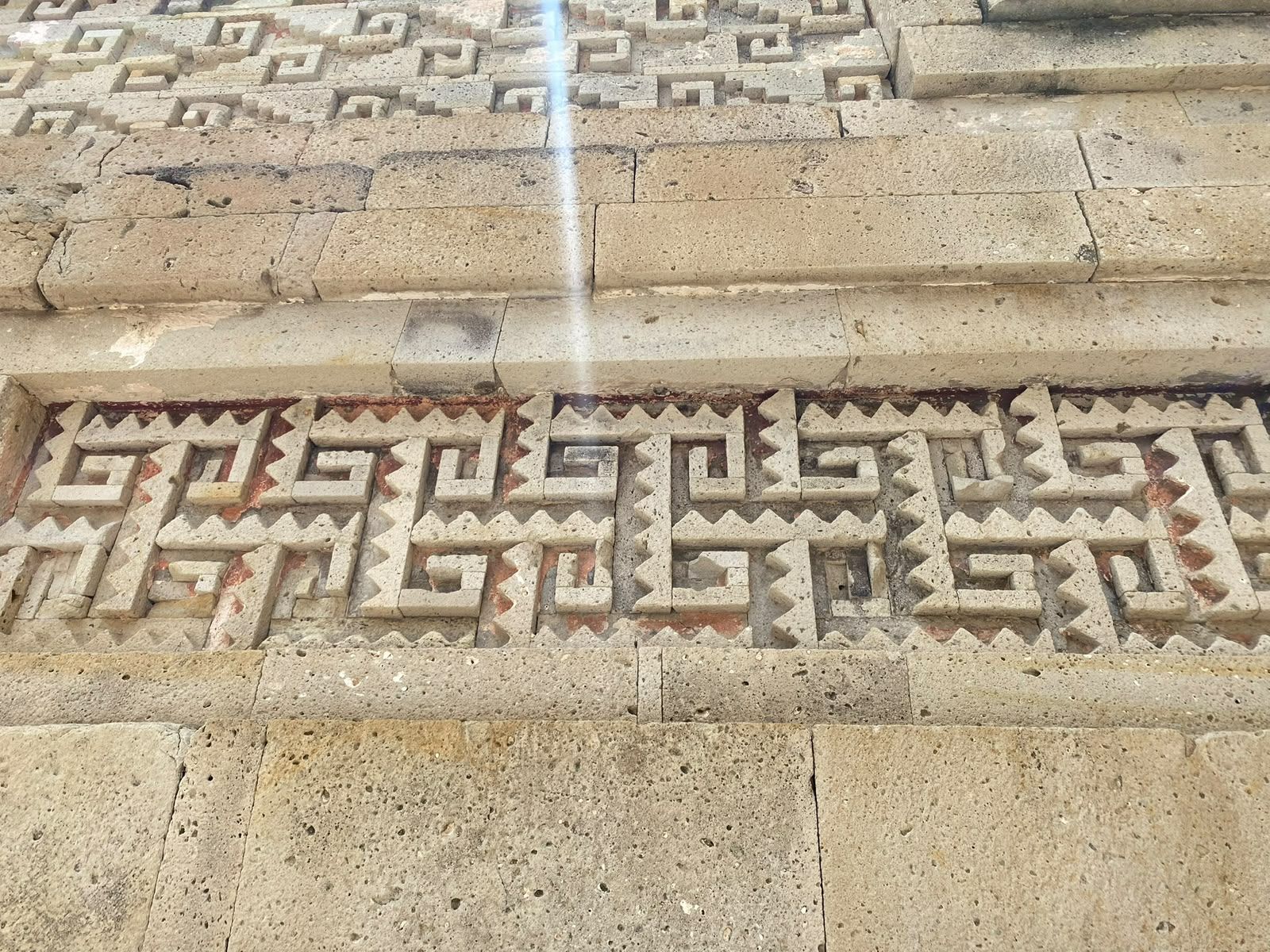
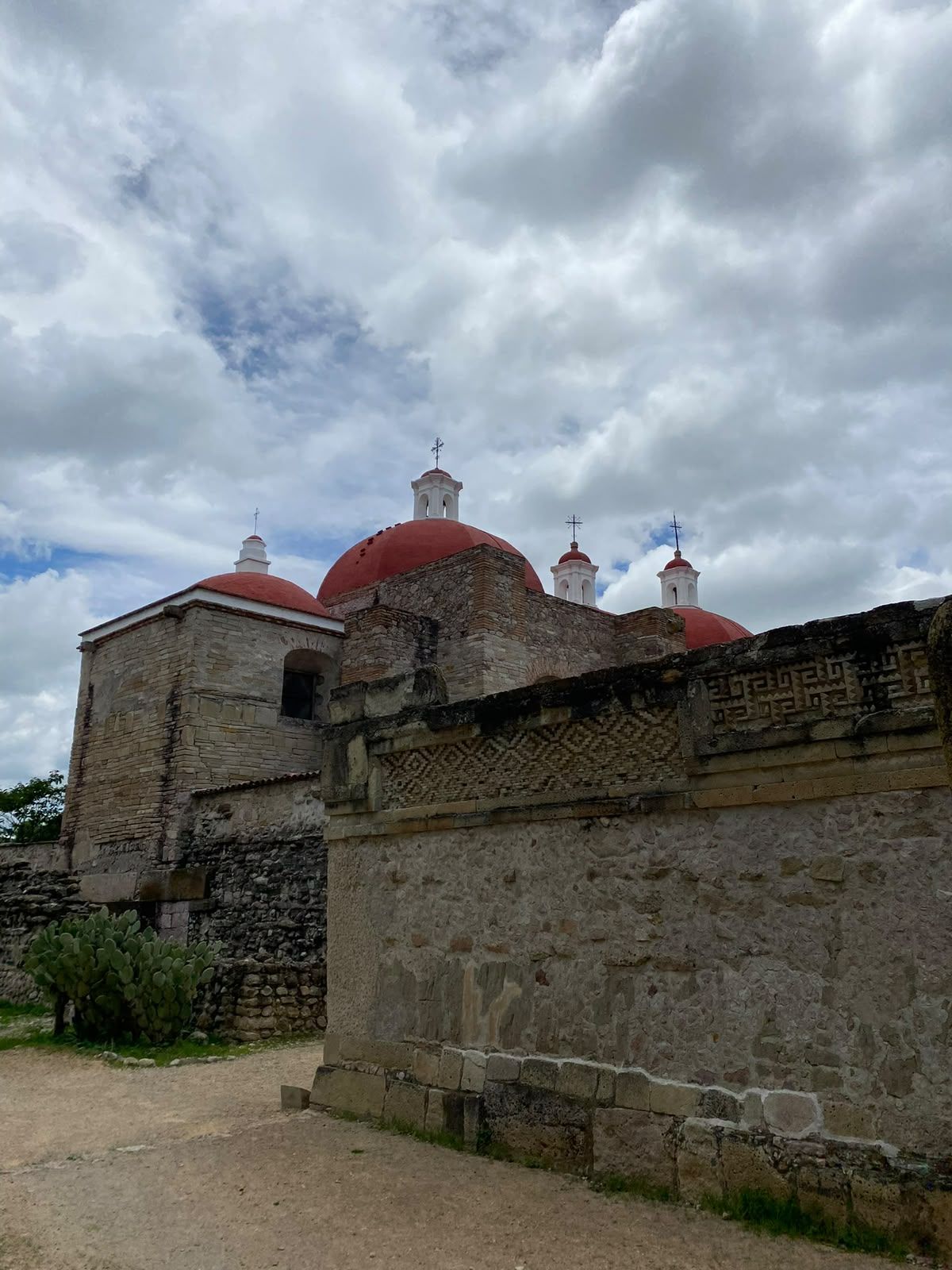
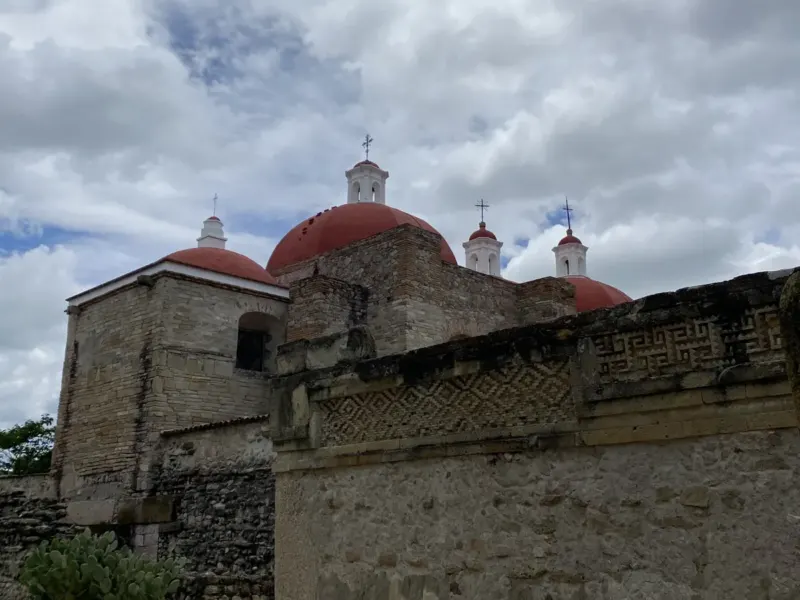
First stop, the Tule tree: an ahuehuete (Montezuma cypress) more than two thousand years old with an absurdly wide trunk (entry about MX$20). Then Teotitlán del Valle, the town of wool rugs dyed with cochineal and indigo; watching the process in a family workshop costs nothing, and buying direct is fairer than buying in the city. Next comes Mitla and its stone fretwork fitted without mortar (entry about MX$210), a Zapotec-Mixtec site that is different from Monte Albán.
The finale is Hierve el Agua, those petrified waterfalls of calcium carbonate on a cliff, with pools you can get into with the mountains in the background. You pay by sections: about MX$20 in San Lorenzo and MX$50 at the San Isidro entrance. The last stretch is a dirt road, and the site has closed over community conflicts in past years, so confirm it’s open before you go. Bring a swimsuit, cash and zero hurry.
Day 4: Mezcal route in Santiago Matatlán

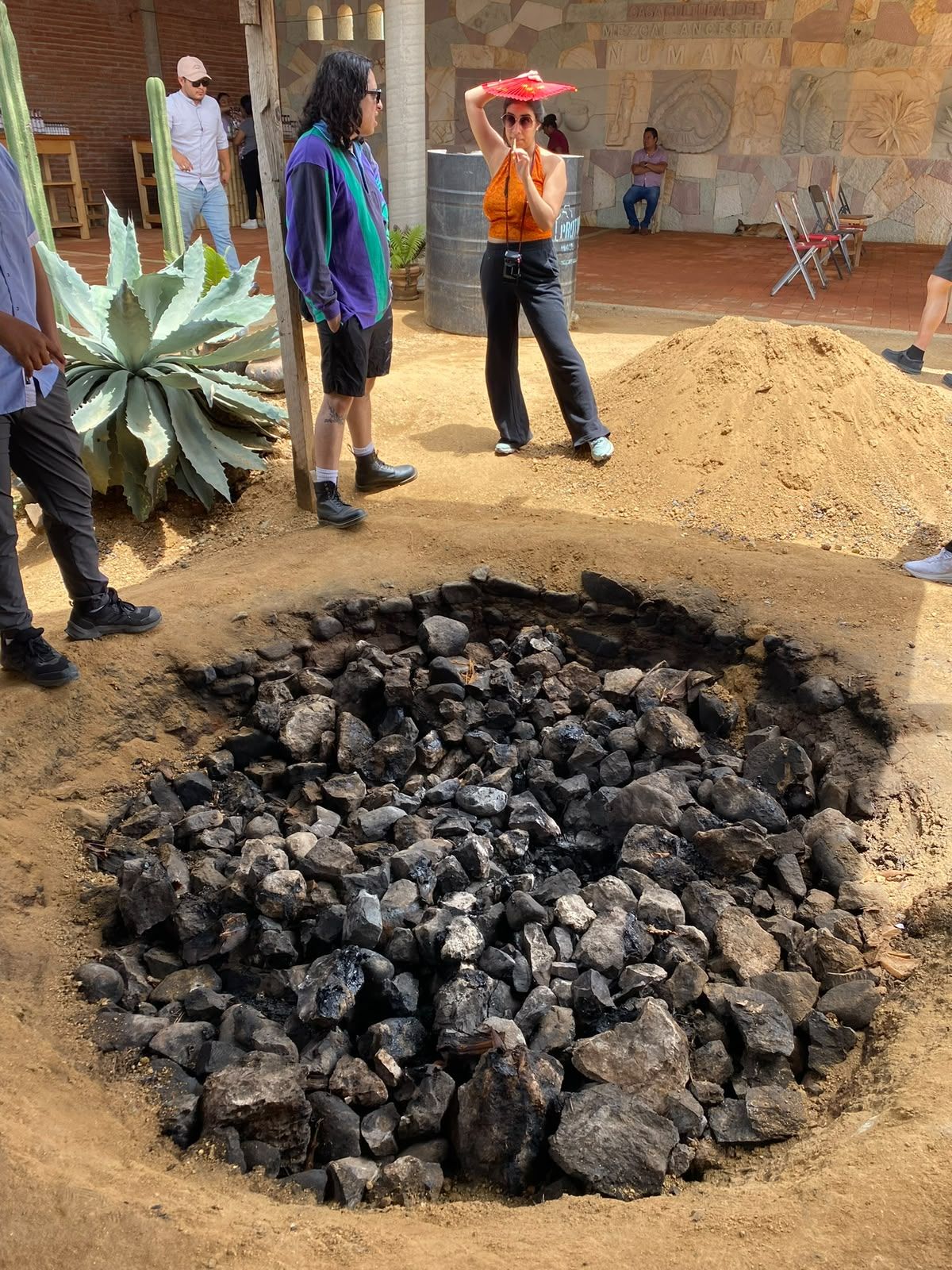
Santiago Matatlán calls itself the world capital of mezcal, and for once the slogan isn’t lying: the town smells of cooked agave. This is where you understand why good mezcal isn’t cheap. At the family palenques you see the underground oven for the agave hearts, the milling with a stone wheel pulled by a horse, fermentation in wooden vats and distillation in copper or clay stills.
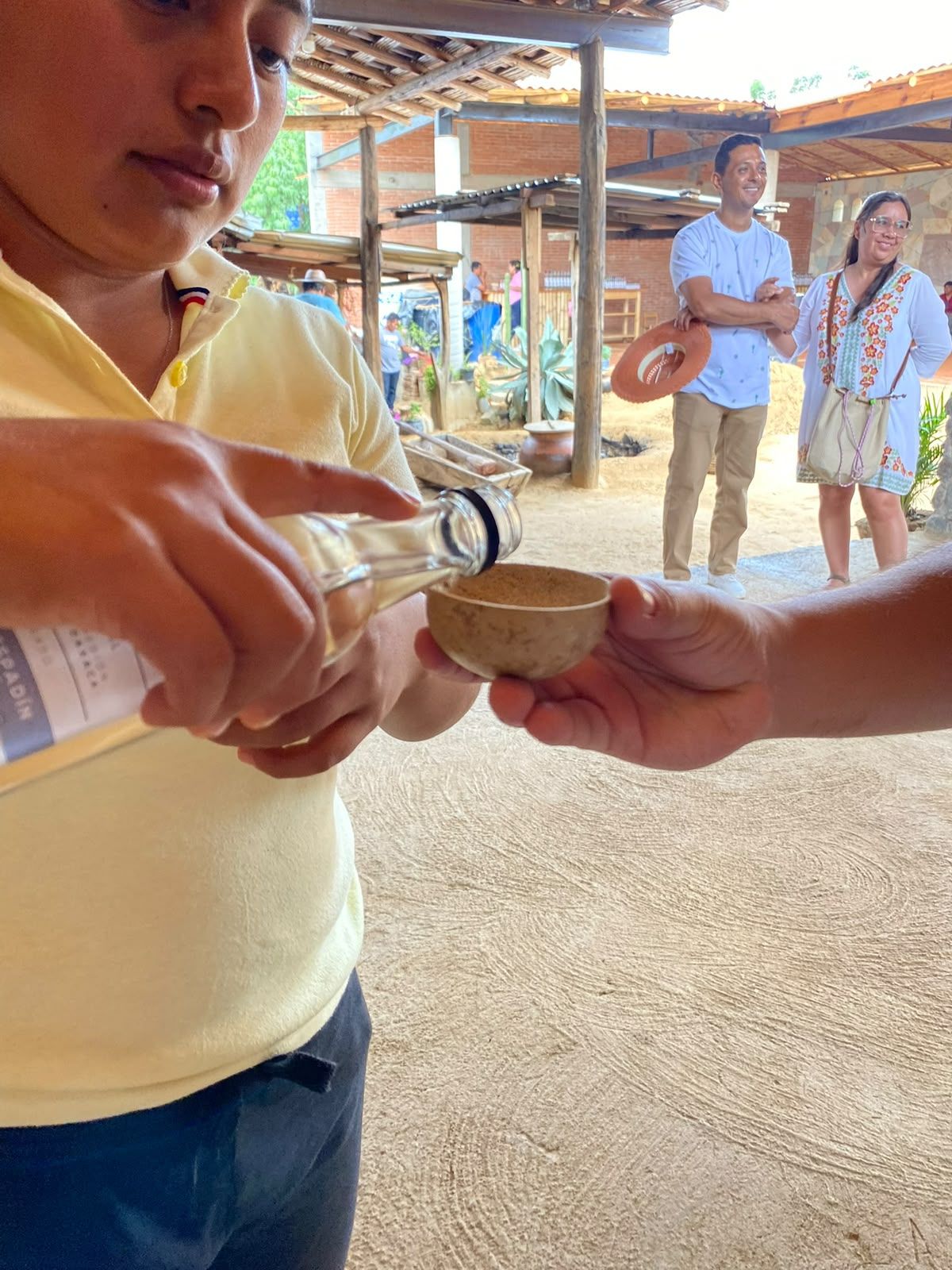
Many tours combine Mitla with Matatlán, so if you already did the full day 3, it’s better to focus only on mezcal here, slowly and tasting as you go. Tastings at small palenques are usually free or for a tip if you buy a bottle; be wary of any place that rushes you to buy. A decent artisanal espadín runs about MX$300–600 a bottle; mezcals made from wild agaves like tobalá or tepeztate cost quite a bit more and are worth it if you like the drink.
If your fourth day falls on a Sunday, swap it for the Tlacolula tianguis (open-air market), one of the oldest Indigenous markets in Mesoamerica. People from all over the valley gather there, and there’s goat barbacoa, chapulines (grasshoppers) and, on some dates, the famous caldo de piedra (stone soup). Eat a big meal before tasting; mezcal on an empty stomach in the heat is a bad idea, and we learned that the hard way.
Day 5: Breathe in the Sierra Norte
If the valleys left you wanting green, head up to the Pueblos Mancomunados, eight Zapotec communities in the Sierra Norte that run their own community tourism. We went to Cuajimoloyas, about 68 km from the city but 1.5 to 2.5 hours of uphill curves. Colectivos leave from the Central de Abastos (the main wholesale market) in the morning (about MX$80–120 each way), but there are few a day, so confirm schedules.
Up there everything changes: pine forest, fog, real cold at night and a silence that doesn’t exist in the city. You book directly with the community or with Expediciones Sierra Norte. You can hike between villages, do a zip line or just walk and eat at the community dining hall, where a home-cooked plate costs little. The cabins are basic and it’s cold, so bring layers; we didn’t have enough warm clothes the first night.
Honestly, this day is optional. If you’re short on time or traveling with small kids, skip it and use that day for more coast or for cooking and alebrije (painted wooden figure) workshops in the city. But if you like the mountains, it’s the perfect contrast to the heat of the valleys.
Day 6: Down to the coast (and being honest about time)
Decision time. The Oaxaca coast is beautiful, but it’s far: getting down there eats half a day. The good news is that the new highway to Puerto Escondido is already open, cutting the trip to about 3 hours versus 6 or 7 on the old winding road. Direct ADO buses run about MX$300–500, with morning departures; there are also vans and short flights if your budget allows.
Our real advice: if you’re going to do the coast with one week in Oaxaca, give it the full days 6 and 7 and forget about squeezing a last day out of the mountains. Get to Puerto Escondido mid-afternoon, walk along Zicatela beach to watch the surfers and have fish for dinner by the sea at La Punta. Don’t try to do the beach the same day you come down from the mountains; your body will ask for rest.
Day 7: Mazunte, Zipolite and the trip back
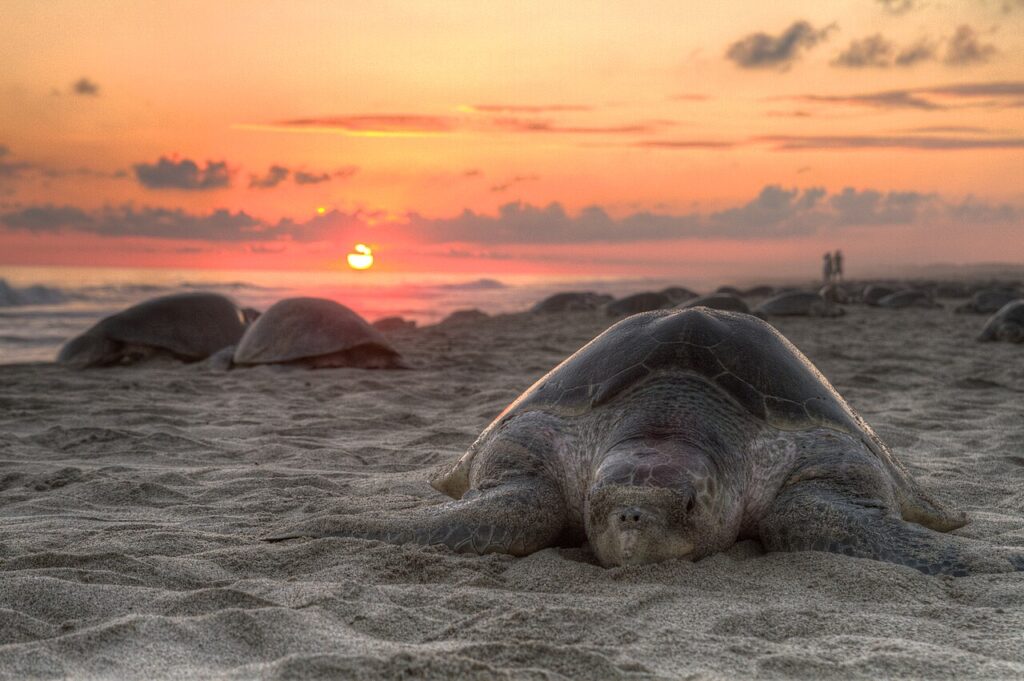
From Puerto Escondido, Mazunte is an hour and a half away on a colectivo marked Pochutla (about MX$55–68): you get off at the San Antonio junction and take a pickup truck from there toward Mazunte (about MX$20). Mazunte is a quiet town, with the Mexican Turtle Center (Centro Mexicano de la Tortuga) and Punta Cometa, the best sunset lookout on the whole coast. Next door is Zipolite, a nudist, bohemian beach with strong surf: respect the flags, there are rip currents.
If your flight leaves from Oaxaca City, watch the timing: the trip back also takes several hours. Many people use the Puerto Escondido or Huatulco airport to fly direct and avoid repeating the road. Close the trip with a pescado a la talla (grilled butterflied fish) and a little mezcal looking at the sea; after a week of ruins, curves and tlayudas, you’ve earned it.
What to prioritize if you have fewer days
With five days, stay in the city and the valleys: days 1 to 4 plus the mountains, and leave the coast for another trip focused only on the beach. The coast deserves its own itinerary, just like the one we once put together for traveling to Tulum on a budget. Forcing everything into one week ends in exhaustion and blurry photos taken from the bus window.
Frequently asked questions about the 7-day Oaxaca itinerary
How much does a 7-day trip through Oaxaca cost?
Counting food, local transportation, entry fees and activities, plan on MX$5,000–7,000 per person in daily expenses, plus lodging (about MX$300–800 per night for a couple) and your trip there. Traveling by colectivo and eating at markets brings it down a lot; with private tours and good hotels, it goes up.
What is the best time to travel to Oaxaca?
The dry months from October to March are comfortable, with sunny days and cool nights. July and August bring the Guelaguetza and lots of atmosphere, but also afternoon rain and high prices. Day of the Dead, at the end of October, is spectacular but gets packed, and you need to book months in advance.
Can you do Oaxaca without a car?
Yes, and we did almost all of it on public transportation and shared tours. Colectivos and ADO buses cover the essentials. For Hierve el Agua and the Sierra Norte, a tour or an early colectivo is the better choice, because departures are limited and the roads are slow.
Is it worth including the coast in just 7 days?
It depends on what you’re looking for. With the new highway, getting down to Puerto Escondido takes about 3 hours, so it does fit if you give it the last two full days. If you’d rather go deeper into culture, mezcal and the mountains, leave the beach for a separate trip and you won’t feel rushed.
What food can’t I miss in Oaxaca?
Tlayudas with tasajo or cecina, mole negro, tetelas, quesillo and chapulines. To drink, a chocolate de agua (hot chocolate made with water) at the Mercado 20 de Noviembre and, of course, artisanal mezcal straight from the palenque. Eat at the markets without fear: it’s usually the tastiest and cheapest option.
Is Hierve el Agua safe in 2026?
The site is safe to visit, but it has closed temporarily in the past because of conflicts between communities over who runs it. Confirm it’s open the same day before you leave, bring cash for the fees charged at each section and expect the last stretch to be a dirt road.
How many days do I need just for Oaxaca City?
With two or three days you cover the historic center, Monte Albán, a couple of neighborhoods and a trip out to the valleys. If you’re short on time, those are the essentials, and you leave the mountains and the coast for later.
For the Mitla day, here are the entrance fee, hours and what to see at the archaeological site.
This English version is a translation of my Spanish guide, made with AI assistance and checked against the original for prices, hours, dates and links. Leer en español

José G.
José G. is a Peruvian traveler who lives in Mexico. Born in Lima and Mexican by adoption, he travels around Mexico and Latin America and writes about what he tries first-hand: where to eat, which museums are worth it, where to stay and what everything really costs. He loves good food, museums, soccer and traveling as a couple. He writes with real prices and honest opinions, and he does not recommend places he has not been to.
How I made this guide: I went in person, and the 7 photos credited “Photo: José G.” are mine. If something did not convince me, I say so.
Keep planning
Mitla Ruins: 2026 Entrance Fee, Hours and Getting There from Oaxaca
Monte Alban Entrance Fee 2026: Hours and Getting There from Oaxaca